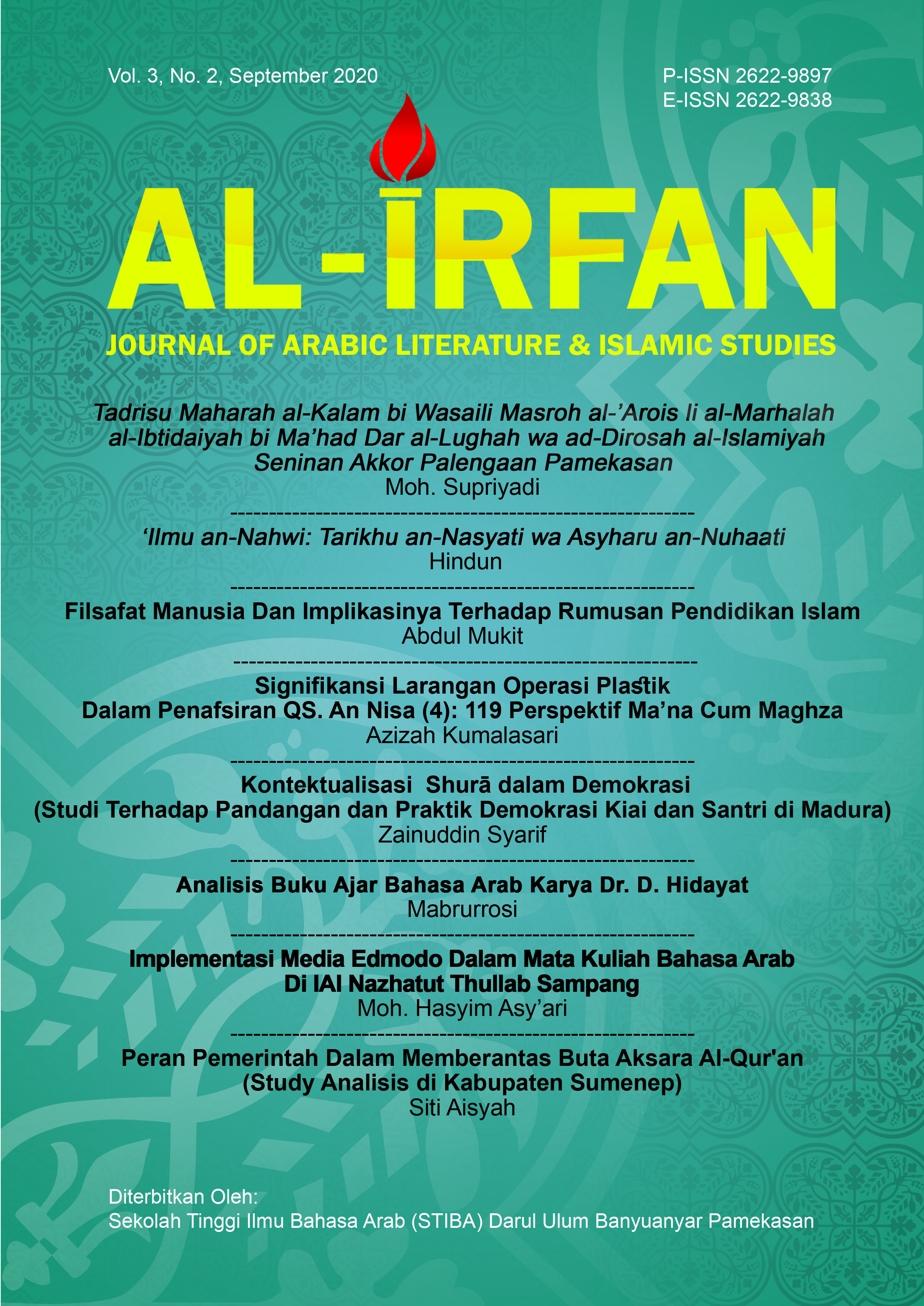
Teaching Speaking Skills Using Puppet Theater Media at the Elementary Level at Dar al-Lughah and Islamic Studies Institute, Seninan Akor, Palengaan, Pamekasan
DOI:
https://doi.org/10.58223/al-irfan.v3i2.718Keywords:
Teaching, Speaking Skills, Puppet TheaterAbstract
In Darul Lughah wad dirasatil islamiyah, it is one of the concentrated institutes that teach Arabic to non-native speakers. All students speak Arabic and it is forbidden to speak anything else. There is no exaggeration in it that teaches the Arabic language, communication on the four language skills, and it also teaches vocabulary, conversation, reading, writing, listening, speaking, grammar, and so on. Teachers used several methods of teaching language skills, including using puppet theater, which is achieved in teaching the skill of speech.
The objectives of the research are: (1) Teaching the skill of speech by means of puppet theater for the elementary stage at the Darul Lughah wad dirasatil islamiyah (2) The influencing factors in teaching the skill of speech by means of puppet theater for the primary stage at the Darul Lughah wad dirasatil islamiyah The researcher uses the curriculum with qualitative and genre input in the field, and data sources in this research study this teaching, and students who participate in this teaching, then the director of the Darul Lughah wad dirasatil islamiyah. The method used to collect the data is the standardized interview, observation, history and documents. The method used in data analysis is the descriptive analytical study method. The result of this research is the use of puppet theater in teaching the skill of speech for the elementary stage at the Darul Lughah wad dirasatil islamiyah that includes objectives, steps, methods, evaluation, and material. The factors affecting this teaching consist of two parts, including: linguistic and non-linguistic.
References
أحمد مخلص، مهارة الكلام وطريقة تدريسها، باميكاسن: الجامعة الإسلامية الحكومية، 2009
أحمد زهدي محضر، العصري عربي إندونيسي، مولتي كريا غرافيكا 1192
أزهر أرشد، مدخل إلى طرق تعليم اللغة العربية، 1998
المنجد في اللغة والإعلام. دار المشرق بيروت الطبعة الحادية والأربعون 2005
انظر عبد الحافظ محمد سلامة. سلسلة تقنيا التعليم: تصميم التدريس. دار الخريجي للنشر والتوزيع جدة 1424 هـ
أوريل بحر الدين, مهارات التدريس, مالانق: مطبعةجامعة مولنامالك إبراهيم, 2011 م
جودت الركابي، طرق تدريس اللغة العربية، دمشق:دار الفكر، 1996
حسين حمدي الطوبجي، وسائل الاتصال والتكنولوجيا في التعليم، كويت: جاممة إنديانا، 1997
دكتور إبراهم محمد عطا، طرق تدريس اللغة العربية والتربة الدينية، مصرية مكتبة النهضة، 1996
دوجلاس بروان، أسس تعلم اللغة وتعليمها. دار النهضة العربية بيروت 1994
رشدي أحمد طعيمة، تعليم العربية لغير الناطقين بها، الرباط، 1989
زيدن عبد الباقي، قواعد البحث الإجتماعي. رياض المكتبات الكبرى القاهرة 1980
سامي عريفج وأصحابه, في مناحج البحث العلمي وأساليبه عمان: دار المجدلوي,1998م
عبد العليم إبراهيم، الموجه الفني لمدرسي اللغة العربية، القاهرة :دار المعارف، 1119
عبد الحميد عبد الله وناصر عبد الله الغالي, أسس إعداد الكتب التعليمية لغير الناطقين بالعربية, دار الاعتصام ١۹۹١ م
عبد الرحمن أحمد عثمان، مناهج البحث العلمي وطرق كتابة الرسائل الجامعية، الخرطوم: دار الجامعية إفريقي العالمية، 1415 ه- 1995
علي أحمد مذكور، تدريس فنون اللغة العربية، المصر: دار الشواف، 1991
حى على يونس، تصميم منهج لتعليم اللغة العربية للأجانب
نور هادي، الموجة لتعليم المهارات اللغوية لغير الناطقين بها، مالانق: مطبعة
الجامعة، 2011
المراجع والمصادر الإندونسية
Fathul mujib dan Nurul Rahmawi, metode Permainan-permainan edukatif dalam belajar bahasa arab (wonosari: DIVA Press, 2011)
lexy j. moleong, penelitian kualitatif, (bandung: remaja rosda karya, 2011)
Maimun Nawawi, Media Pembelajaran Bahasa Arab, (Pamekasan: Stain Press, 2009)
Downloads
Published
How to Cite
Issue
Section
License
Copyright (c) 2020 Moh. Supriyadi; Muhammad Supriyadi

This work is licensed under a Creative Commons Attribution 4.0 International License.
Lisensi :
Al-Irfan: Journal of Arabic Literature and Islamic Studies is published under conditions Creative Commons Attribution 4.0 International License / CC BY 4.0 This license permits anyone to copy and redistribute this material in any form or format, modify, modify, and make derivative works of this material for any purpose, including commercial purposes, so long as they credit the author for the original work.