
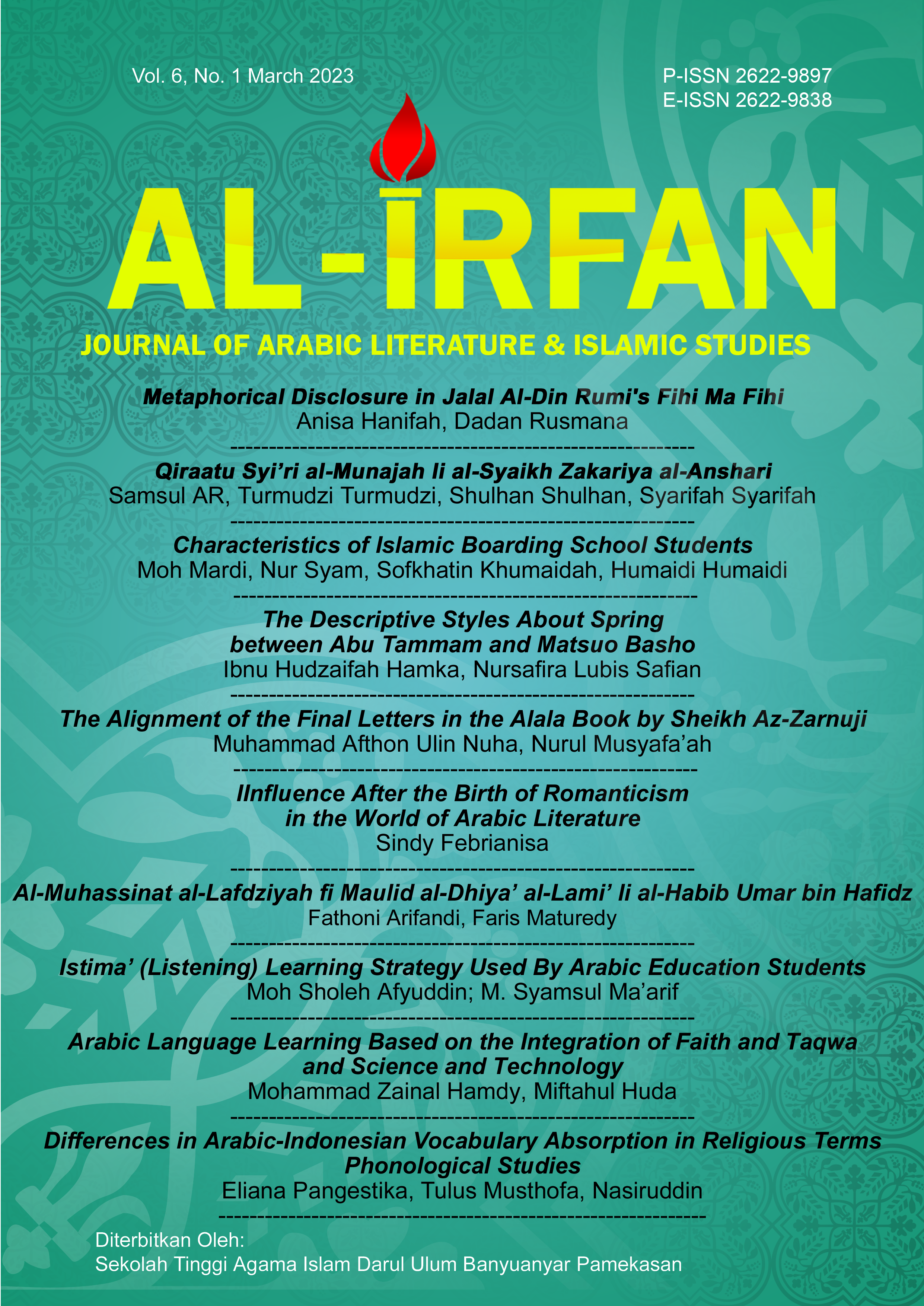
The Descriptive Styles About Spring between Abu Tammam and Matsuo Basho: A Comparative Study
DOI:
https://doi.org/10.58223/al-irfan.v6i1.765Keywords:
Spring, Abu Tammam, Matsuo Basho, Arabic PoetAbstract
Abu Tammam is considered a great Arab poet of his time. Abu Tammam created various poems from different topics such as spinning, praise, satire, and some of his poems include nature poetry about spring. On the other hand, Matsuo Basho was one of the most famous Japanese poets, but the greatest in writing haiku, and of most of his poetry about nature and its phenomena. Based on this, the researchers view that they should to be studied and analyzed the issue, and then compare the two poems of both poets. The study aims to show their creativity in formulating the two poems, and to reveal the aspects of agreements and disagreement between their vision, using the descriptive analytical method before resorting to the American School approach in comparative study, where the study attempts to highlight on the similiarites and differences between the two studied poems. The study found that both poems are full of descriptive styles by the presence of plants and rain. However, the use of descriptive styles in the two poems differs from one poet to another. Where Matsuo Basho deals in his poetry with styles that refer to the signs of nature from the names of animals such as birdds, sparrows, butterflies, mice and bats, and these nouns were not found in Abu Tamam’s poem. While the names of the cosmic such as the sun, the moon and the earth combined more for description or similes and metaphor in Abu Tamam poem. These differences are due to the difference in culture, language, and geographical condition between the two studied literatures: Arabs and Japan.
References
Apriyani, C. (2018). Klasifikasi Kigo Pada Haiku Karya Seishi Yamaguchi Menggunakan Teori Semiotika Pierce. Undergraduate Thesis, Darma Persada University, Faculty of Literature, Jakarta.
Asoo, I. (1983). Nihon Bungakushi (Sejarah Kesustraan Jepang) (1 ed.). (F. o. Departement of East Asia - Japan Section, Trans.) Depok: UI Press.
Basho, M. (2004). Basho's Haiku: Selected Poems by Matuo Basho. (L. B. David, Ed.) New York: State University of New York Press.
Imanuella, S. K. (2013). Makna Puitis bunga Sakura Dalam Haiku Matsuo Basho dan Taigo Ryokah. Undergraduate Thesis, University of Hasanudin Makassar, Makassar.
Tasia, A. (2015). Analisis Kesalahan Siswa Dalam Penulisan Hiragana dan Katakana di SMA N 15 Semarang. Undergraduate Thesis, Statte University of Semarang, Faculty of Language and Art, Semarang.
Wulandari, S. (2017). Moral bushido Dalam Haiku Karya Masaoka Shiki. Ayumi: Jurnal Budaya, Bahasa dan Sastra, 1(4).
Yasuko Morita, Dila Rismayanti. (2017). Keunikan Sastra Jepang. Jakarta: Kesaint Blanc Publisher.
أبو يعقوب يوسف ابن أبي بكر محمد ين علي السكاكي. (1407هـ/1987م). مفتاح العلوم (الإصدار ط2). (نعيم زرزور، المحرر) بيروت: دار الكتب العلمية.
أبي بكر محمد بن يحيى الصولي. (1937). أخبار أبي تمام (الإصدار 1). القاهرة: مطبعة التأليف والترجمة والنشر.
أحمد الشيب. (2003م). الأسلوب (الإصدار 12). مكتبة النهضة المصرية.
جمال الدين ابن منظور. (1414هـ). لسان العرب (المجلد 1). بيروت: دار صادر.
حجازري حسين مهدي. (2007). أبو تمام بن أوس الطائي: دراسة نقدية في تجربة الشعرية. الرسالة الجامعية غير منشورة، جامعة خرطوم، الخرطوم.
سمير عوجيف. (2015). جمالية التشكيل الشعري - أبو تمام أنموذجا. الرسالة الجامعية غير منشورة، جامعة أحمد بن بلة 1، وهران.
ضياء الدين الجماس. (أكتوبر, 2013). الفرق بين الوزن والإيقاع. تم الاسترداد من منتدى العروض رقميا: http://www.arood.com/vb/showthread.php?t=7513
طه حسين. (2014). من حديث الشعر والنثر. القاهرة: مؤسسة هنداوي للتعليم والثقافة.
عبد الصاحب مهدي علي. (2011). في مفهوم الشعر ولغته: خصائص النص الشعري. مجلة جامعة الشارقة، 8(3)، 239.
علي الجارم، و مصطفى أمين. (2007م). البلاغة الواضحة. حاكرتا: روضة فريسا.
فاتح الحجية. (1 يوليو, 2013). الأساليب الشعرية . تاريخ الاسترداد 23 نوفمبر , 2020، من alnoor.se: http://www.alnoor.se/article.asp?id=206602
محمد أبو الفتوح غنيم. (14 مايو, 2009). تعريف الشعر وفائدته وفضله وعناصره. تاريخ الاسترداد 18 نوفمبر, 2020، من www.diwanalarab.com: https://www.diwanalarab.com/%D8%AA%D8%B9%D8%B1%D9%8A%D9%81-%D8%A7%D9%84%D8%B4%D8%B9%D8%B1
محمد عبدالعظيم الرزقاني. (1362 هـ / 1943 م). مناهل العرفان في علوم القرآن (الإصدار ط3). مطبعة عيسى البابي الحلبي وشكاه.
محمود مصطفى. (1996). أهدى السبيل إلى علمي الخليل: العروض والقافية (الإصدار ط1). بيروت: عالم الكتب.
مصطفى جمال الدين. (1390هـ/1970م). الإيقاع في الشعر العربي من البيت إلى التفعيلة (الإصدار د.ط). مطبعة النعمان.
Downloads
Published
How to Cite
Issue
Section
License
Copyright (c) 2023 adminojs adminojs; Ibnu Hudzaifah Hamka , Nursafira Lubis Safian

This work is licensed under a Creative Commons Attribution 4.0 International License.
Lisensi :
Al-Irfan: Journal of Arabic Literature and Islamic Studies is published under conditions Creative Commons Attribution 4.0 International License / CC BY 4.0 This license permits anyone to copy and redistribute this material in any form or format, modify, modify, and make derivative works of this material for any purpose, including commercial purposes, so long as they credit the author for the original work.